CONTENTS 1. What is 3-mercaptopropionic acid? 2. Basic properties of 3-MPA 3. Structural features and functional roles 4. Main application areas 5. Comparison with related mercapto compounds 6. How to select an appropriate grade 7. Packaging, storage, and transport 8. Safe handling and emergency management 9. Frequently asked questions |
1. What Is 3-Mercaptopropionic Acid?
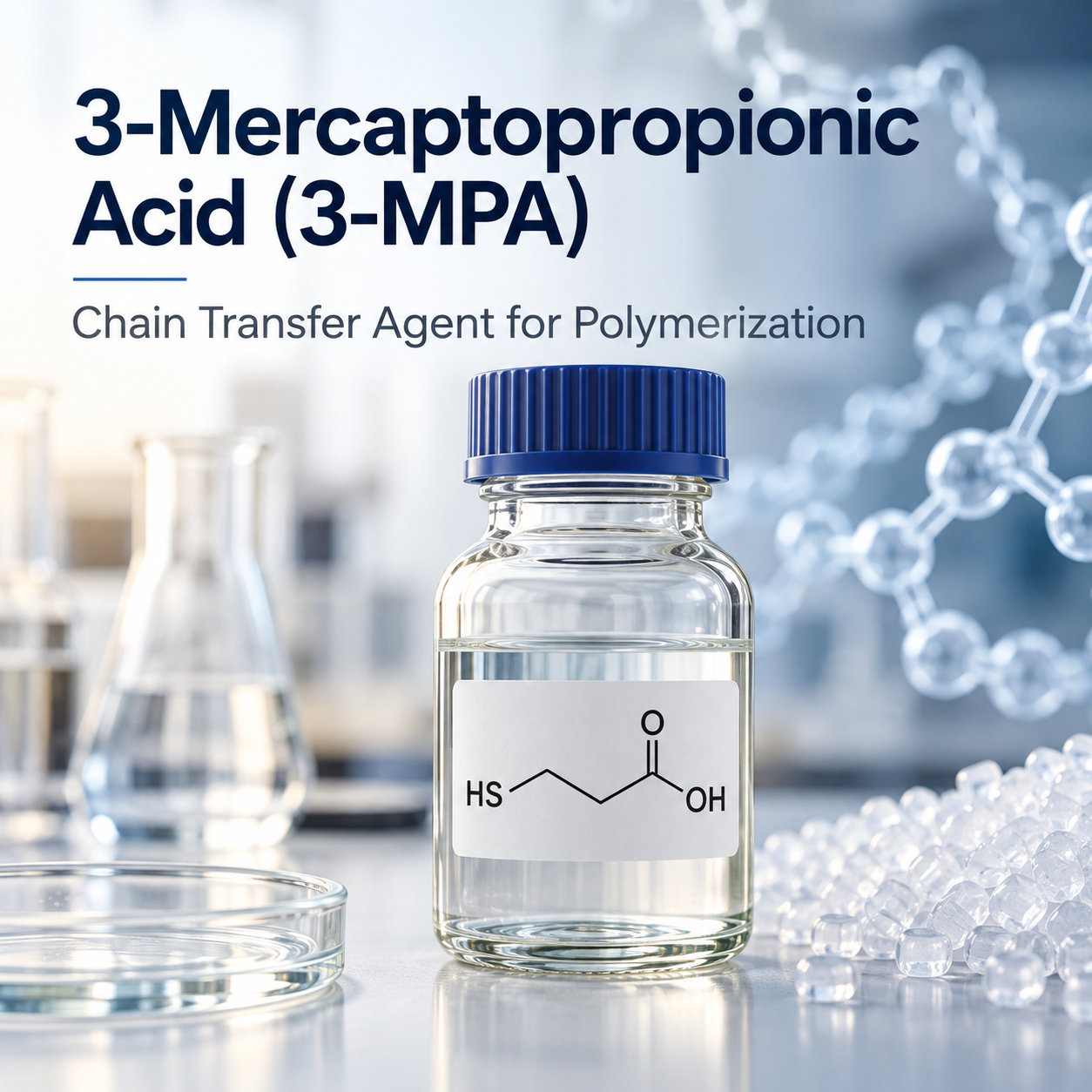
3-Mercaptopropionic acid is an organic acid containing a thiol group (SH) and a carboxylic acid group (COOH). Its simplified structural formula is HS-CH2-CH2-COOH. The English name is 3-Mercaptopropionic Acid, the common abbreviation is 3-MPA, and the CAS number is 107-96-0.
The two functional groups provide different reaction sites. The thiol group can participate in chain-transfer reactions, thiol-ene addition, and selected substitution reactions. The carboxyl group can participate in esterification, amidation, or salt formation. This dual-function structure makes 3-MPA useful as a reactive intermediate and a molecular-weight-control raw material.
Naming note: In many industrial purchasing documents, “mercaptopropionic acid” refers to 3-mercaptopropionic acid. The English name, CAS number, and molecular structure should still be confirmed to avoid confusion with 2-mercaptopropionic acid. |
2. Basic Properties of 3-MPA
Actual specifications for assay, color, water content, and impurities vary by product grade and manufacturing process. The following information is intended for general identification. Procurement decisions should be based on the supplier's technical data sheet, certificate of analysis, and safety data sheet.
Item | General description |
Product name | 3-Mercaptopropionic Acid |
Common abbreviation | 3-MPA |
CAS number | 107-96-0 |
Molecular formula | C3H6O2S |
Molar mass | 106.14 g/mol |
Typical appearance | Colorless to pale-yellow transparent liquid |
Odor | Noticeable sulfur-containing odor |
Main functional groups | Thiol group and carboxylic acid group |
General product role | Chain-transfer agent and reactive chemical intermediate |
2.1 Appearance and Odor
Commercial material is generally supplied as a colorless to pale-yellow transparent liquid. Color may change during storage because of temperature, air exposure, or oxidation. The product has a distinct sulfur odor, so closed transfer and effective local ventilation are usually preferred.
2.2 Solubility and Reactivity
The molecule contains polar functional groups and can interact with water and other polar media. Its solubility and compatibility in a formulation still depend on concentration, pH, salt content, and the solvent system.
2.3 Sensitivity to Oxidation
The thiol group may oxidize in the presence of air, metal ions, or oxidizing agents, forming disulfide-type products. Storage systems should therefore limit unnecessary air exposure and keep the product away from strong oxidizers and incompatible materials.
3. Structural Features and Functional Roles
Functional role | General effect |
Chain transfer | Controls polymer molecular weight in selected free-radical systems |
Thiol addition | Participates in thiol-ene or thiol-yne reactions |
Intermediate synthesis | Supports production of sulfur-containing esters, amides, and derivatives |
Carboxyl reactivity | Allows esterification, amidation, and salt formation |
Surface functionalization | Can introduce carboxyl functionality on selected material surfaces |
3.1 Chain-Transfer Control in Polymerization
During free-radical polymerization, the thiol group can react with a growing polymer radical and transfer the active center. This changes the average molecular weight and may also influence solution viscosity, processing behavior, and final polymer performance. The effect depends on monomer type, initiator system, temperature, dosage, and feed strategy.
3-MPA may be evaluated in selected acrylic, methacrylic, solution, or emulsion polymerization systems when a carboxyl-terminated or carboxyl-functional structure is useful. Laboratory and pilot testing should confirm molecular weight, residual monomer, odor, color, and storage stability.
3.2 Thiol-Ene and Related Addition Reactions
The thiol group can add across suitable unsaturated bonds, making 3-MPA useful for introducing a carboxyl group or a sulfur-containing linkage. Such chemistry is used in selected functional polymers, radiation-curable systems, surface modification, and research-scale material synthesis. Reaction conditions should be designed and controlled by qualified technical personnel.
3.3 Downstream Reactions of the Carboxyl Group
The carboxyl group can react with alcohols, amines, or bases to form esters, amides, or salts. Because one molecule contains both thiol and carboxyl functionality, 3-MPA can serve as a connecting intermediate in multi-step synthesis routes.
4. Main Application Areas
Application area | Typical product role |
Polymer production | Molecular-weight and viscosity control |
Stabilizer intermediates | Raw material for selected sulfur-containing stabilizer components |
Pharmaceutical intermediates | Intermediate for selected sulfur-containing structures |
Agrochemical intermediates | Intermediate in selected crop-protection synthesis routes |
Functional materials | Thiol addition and surface functionalization |
Specialty chemicals | Production of esters, amides, salts, and other derivatives |
4.1 Polymer Molecular-Weight Regulation
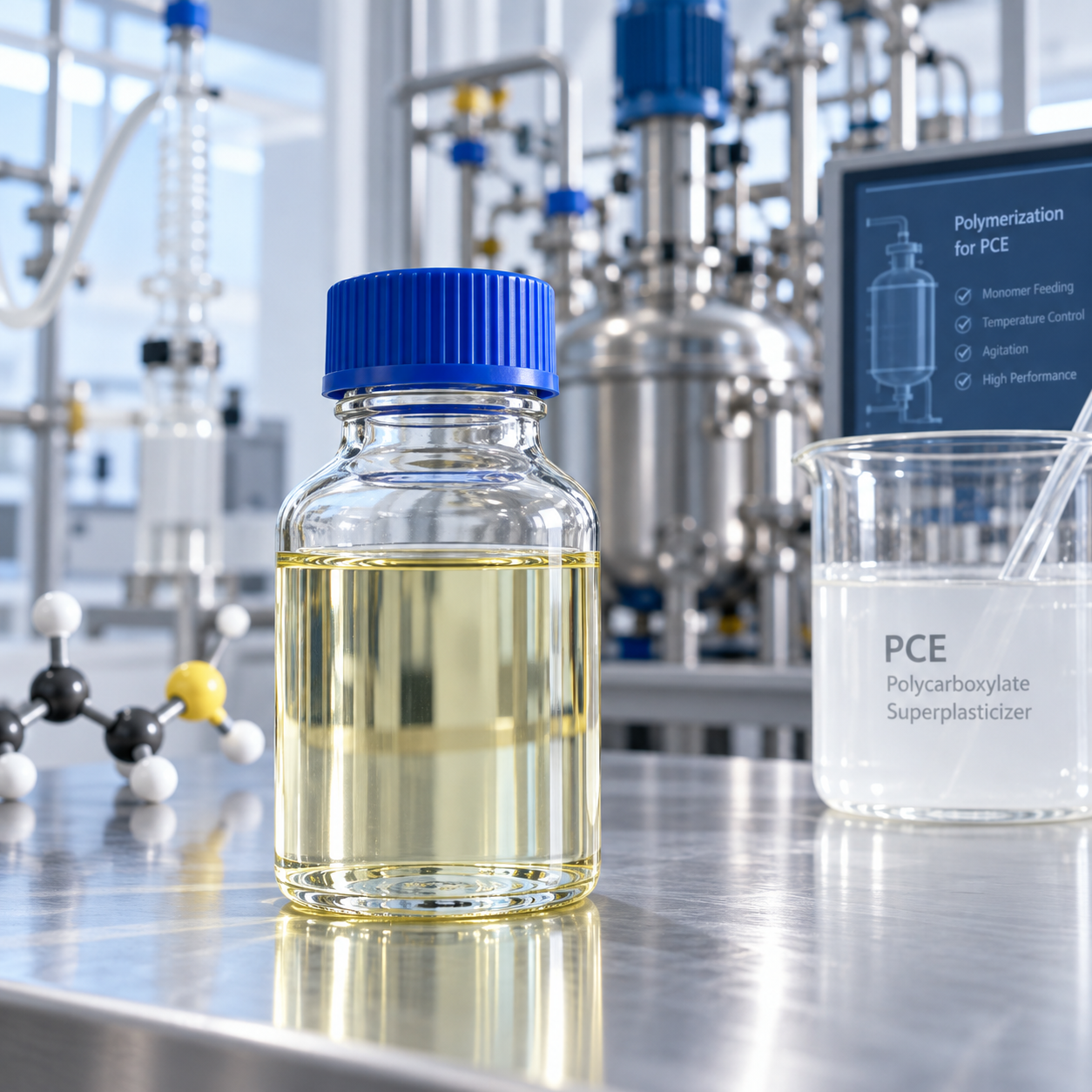
3-MPA can be used as a chain-transfer agent in selected free-radical polymerization systems. Molecular-weight control may influence solution viscosity, film formation, dispersibility, and processing. Because small dosage changes can affect the polymer result, the product should be introduced through controlled metering and validated by testing.
Polymerization note: A laboratory and pilot program should evaluate molecular weight, viscosity, residual monomer, odor, color, and storage stability before full-scale use. |
4.2 Stabilizer-Intermediate Applications
3-MPA can be used as an intermediate in the manufacture of selected sulfur-containing stabilizer components and derivatives. Downstream routes differ, so assay, color, water content, and impurity requirements should be agreed according to the customer's synthesis process.
4.3 Pharmaceutical and Agrochemical Intermediates
The thiol and carboxyl groups can participate in multiple organic transformations, allowing 3-MPA to serve as an intermediate in selected pharmaceutical, agrochemical, and specialty-chemical routes. These applications may require tighter impurity profiles, traceability, color control, and batch-to-batch consistency.
4.4 Functional Materials and Surface Modification
The thiol group can interact with selected metal surfaces, while the carboxyl group remains available for further coupling or dispersion control. This makes 3-MPA useful in some nanoparticle, metal-particle, sensor, and functional-material systems. Suitability depends on particle size, surface chemistry, solvent, pH, and storage conditions.
5. Comparison with Related Mercapto Compounds
Several low-molecular-weight mercapto compounds have similar names but different structures and application behavior. The CAS number and functional-group position should be confirmed before purchase.
Product | Key structural distinction |
3-Mercaptopropionic acid | HS-CH2-CH2-COOH; thiol plus carboxyl functionality |
2-Mercaptopropionic acid | Also called thiolactic acid; different functional-group position |
Thioglycolic acid | Shorter carbon chain; used in other reduction, metal-treatment, and synthesis systems |
2-Mercaptoethanol | Contains thiol plus hydroxyl functionality rather than a carboxyl group |
Procurement check: A purchase specification should state “3-Mercaptopropionic Acid, 3-MPA, CAS 107-96-0” to reduce the risk of receiving a similarly named isomer or a different mercapto compound. |
6. How to Select an Appropriate Grade
• Define the downstream use: chain transfer, stabilizer-intermediate synthesis, pharmaceutical or agrochemical intermediate, or functional material.
• Confirm assay and impurity limits: different synthesis routes require different purity profiles.
• Review color requirements: pale resins, coatings, and specialty chemicals may need tighter color control.
• Review water content: water can affect esterification, amidation, and selected polymerization systems.
• Consider oxidation products: thiol oxidation may reduce active content and reaction consistency.
• Confirm packaging compatibility: the container should support sealing, chemical compatibility, and transport requirements.
• Run sample tests: verify reaction rate, yield, molecular weight, odor, color, and final-product performance before regular purchasing.
Use case | Recommended checks |
Chain-transfer use | Assay, color, water, polymer molecular weight, odor |
Stabilizer intermediate | Purity, impurities, color, and downstream yield |
Pharma or agro intermediate | Impurity profile, traceability, and batch consistency |
Functional materials | Reactivity, compatibility, and surface-modification result |
Long-term storage | Container seal, color change, and oxidation stability |
7. Packaging, Storage, and Transport
7.1 Packaging
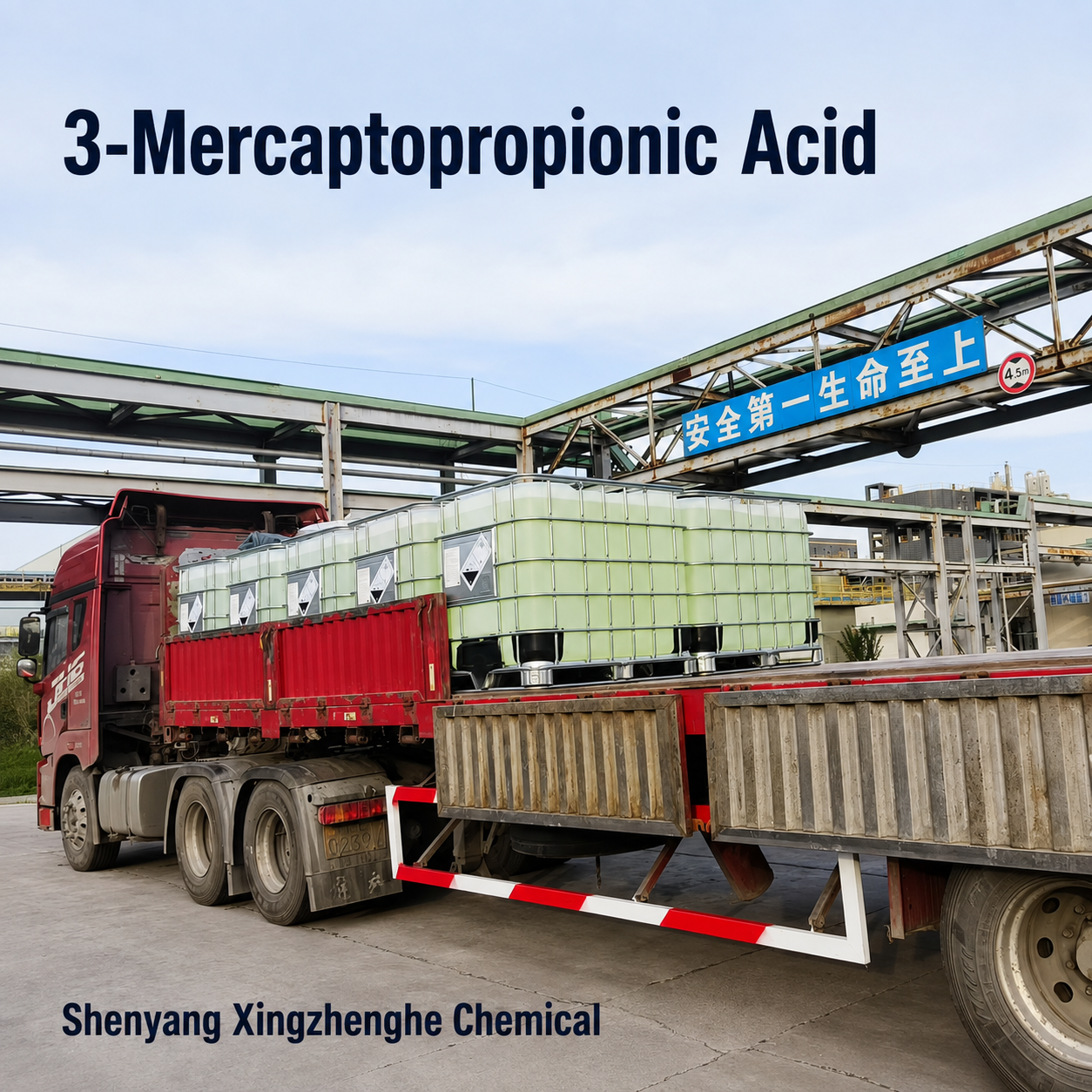
3-MPA is generally supplied in tightly closed containers made from materials compatible with the product. Container material, net weight, and loading method should follow the supplier's product documentation and transport requirements. Before use, inspect the seal, label, and container condition.
7.2 Storage
Store the product in a cool, dry, well-ventilated area away from heat, ignition sources, strong oxidizers, and incompatible chemicals. Keep containers closed to limit air and moisture entry, odor release, and accidental contamination. Storage areas should include appropriate spill-control measures.
7.3 Transport
Transport classification, labels, packaging requirements, and documentation should be confirmed from the current safety data sheet, a transport assessment where required, and the destination country's regulations. Shipment arrangements should not be based solely on experience with ordinary non-hazardous chemicals.
Documentation note: Before shipment, confirm the SDS, certificate of analysis, packaging details, and any transport-identification documents required for the selected route and destination. |
8. Safe Handling and Emergency Management
3-MPA is an acidic, reactive, sulfur-containing liquid. Direct skin or eye contact, inhalation of vapor or mist, and uncontrolled exposure should be avoided. Operators should receive task-specific training and follow the current SDS, site procedures, and applicable occupational-safety requirements.
• Use closed transfer or local exhaust ventilation where practical.
• Wear suitable chemical-resistant gloves, eye and face protection, and other PPE specified by the SDS.
• Keep the product away from strong oxidizers, heat sources, and incompatible materials.
• If a spill occurs, isolate the area and have trained personnel respond under the site emergency plan and SDS guidance.
• Dispose of contaminated absorbents, wastewater, and packaging through compliant waste-management channels.
Emergency principle: This article does not replace the product safety data sheet. In the event of exposure, a spill, or a fire, follow the current SDS, the company emergency plan, and instructions from local emergency services. |
9. Frequently Asked Questions
Q1: Are mercaptopropionic acid and 3-mercaptopropionic acid the same product? A: In many industrial purchasing situations, mercaptopropionic acid refers to 3-MPA. The English name and CAS number should still be checked. |
Q2: What does 3-MPA do in polymerization? A: It can act as a chain-transfer agent in selected free-radical systems, helping control polymer molecular weight, molecular-weight distribution, and solution viscosity. |
Q3: Can one dosage be used in every acrylic polymerization system? A: No. Monomer composition, initiator, temperature, pH, solids content, and feed strategy all influence the result. Testing is required. |
Q4: Does darker color always mean that the material is unusable? A: Not necessarily. Color change may relate to storage time, temperature, or oxidation. Assay, impurities, color, and downstream performance should be evaluated together. |
Q5: Can 3-MPA be replaced directly with thioglycolic acid? A: No. The carbon-chain length, reaction behavior, and effect on the final product differ. Direct one-to-one replacement is not recommended without testing. |
Q6: Why should 3-MPA be stored in sealed containers? A: Sealing helps reduce oxidation, moisture entry, contamination, and sulfur-odor release. |
Q7: Which documents are commonly reviewed before purchase? A: Customers commonly review the COA, TDS, SDS, packaging information, and any transport documents required for the destination and shipping method. |
10. Conclusion
3-Mercaptopropionic acid is a dual-functional chemical raw material containing both thiol and carboxyl groups. It can be used for polymer molecular-weight control, intermediate synthesis, and functional-material modification. The same reactivity that supports these applications also makes assay, oxidation control, packaging, storage, and safe handling important. Product selection should consider purity, color, water content, impurities, downstream process requirements, and sample-test results rather than a single specification alone.
Need Product Information for 3-Mercaptopropionic Acid? Shenyang Xingzhenghe Chemical Co., Ltd. can provide product information for 3-MPA and related specialty chemical raw materials. Specifications, packaging, transport conditions, and application suitability should be confirmed according to the customer's process, destination regulations, and sample-test results. |