
What Is 3-Mercaptopropionic Acid (3-MPA)? Properties, Uses and Applications
3-Mercaptopropionic Acid, commonly abbreviated as 3-MPA, is an organosulfur compound containing both a thiol group (-SH) and a carboxylic acid group (-COOH).
Its CAS number is 107-96-0 and its molecular formula is C₃H₆O₂S.
The presence of two different reactive functional groups makes 3-MPA a useful raw material and chemical intermediate in polymer chemistry, organic synthesis and other specialty chemical processes.
But what exactly is 3-Mercaptopropionic Acid used for, and what should industrial buyers consider when selecting a 3-MPA grade?
What Is 3-Mercaptopropionic Acid?
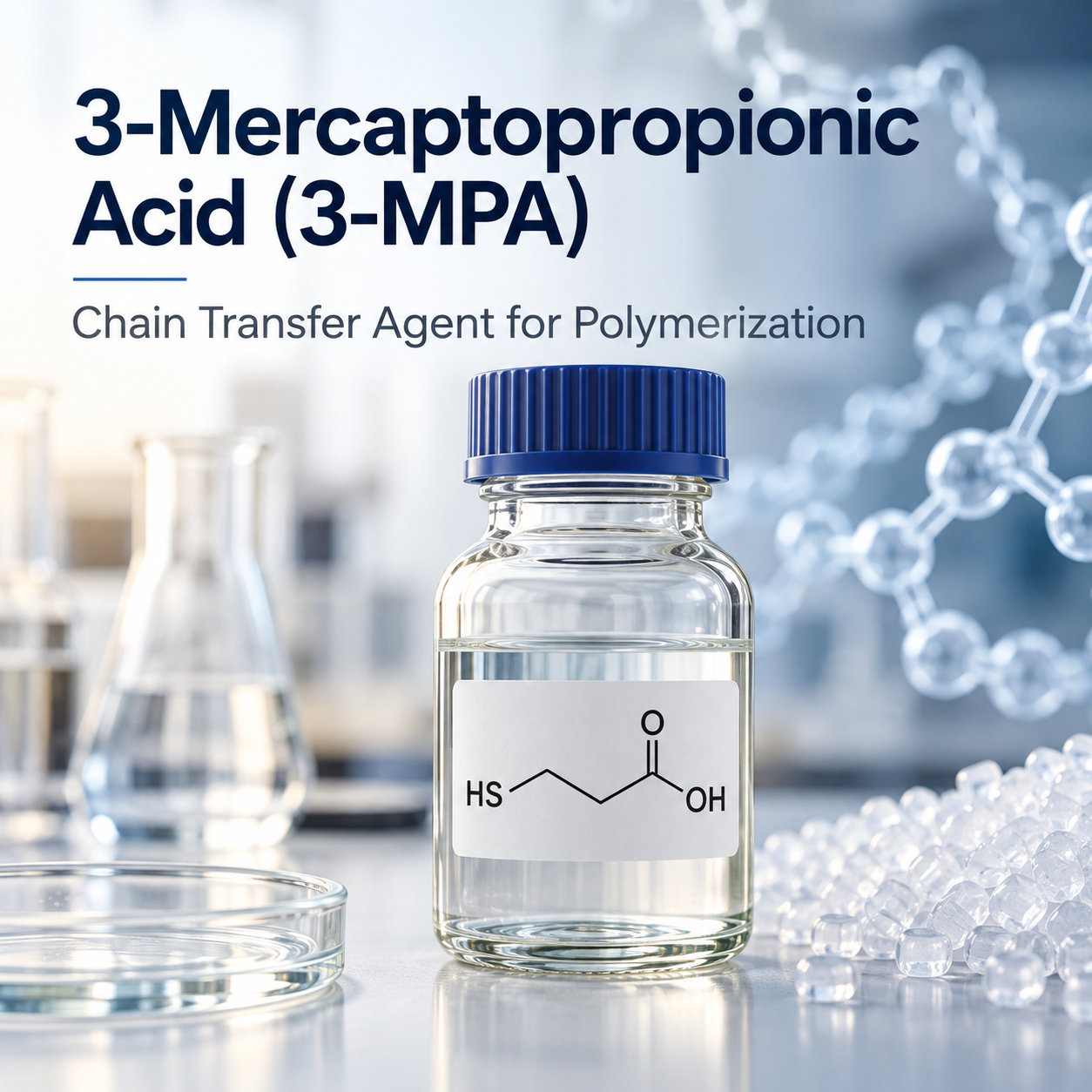
3-Mercaptopropionic Acid is also known as 3-MPA and can be represented structurally as:
HS-CH₂-CH₂-COOH
Basic chemical information includes:
Chemical Name: 3-Mercaptopropionic Acid
Abbreviation: 3-MPA
CAS Number: 107-96-0
Molecular Formula: C₃H₆O₂S
Molecular Weight: 106.14
Its structure contains a thiol group at one end of the molecule and a carboxylic acid group at the other.
This combination is responsible for many of its useful chemical properties.
What Does 3-MPA Look Like?
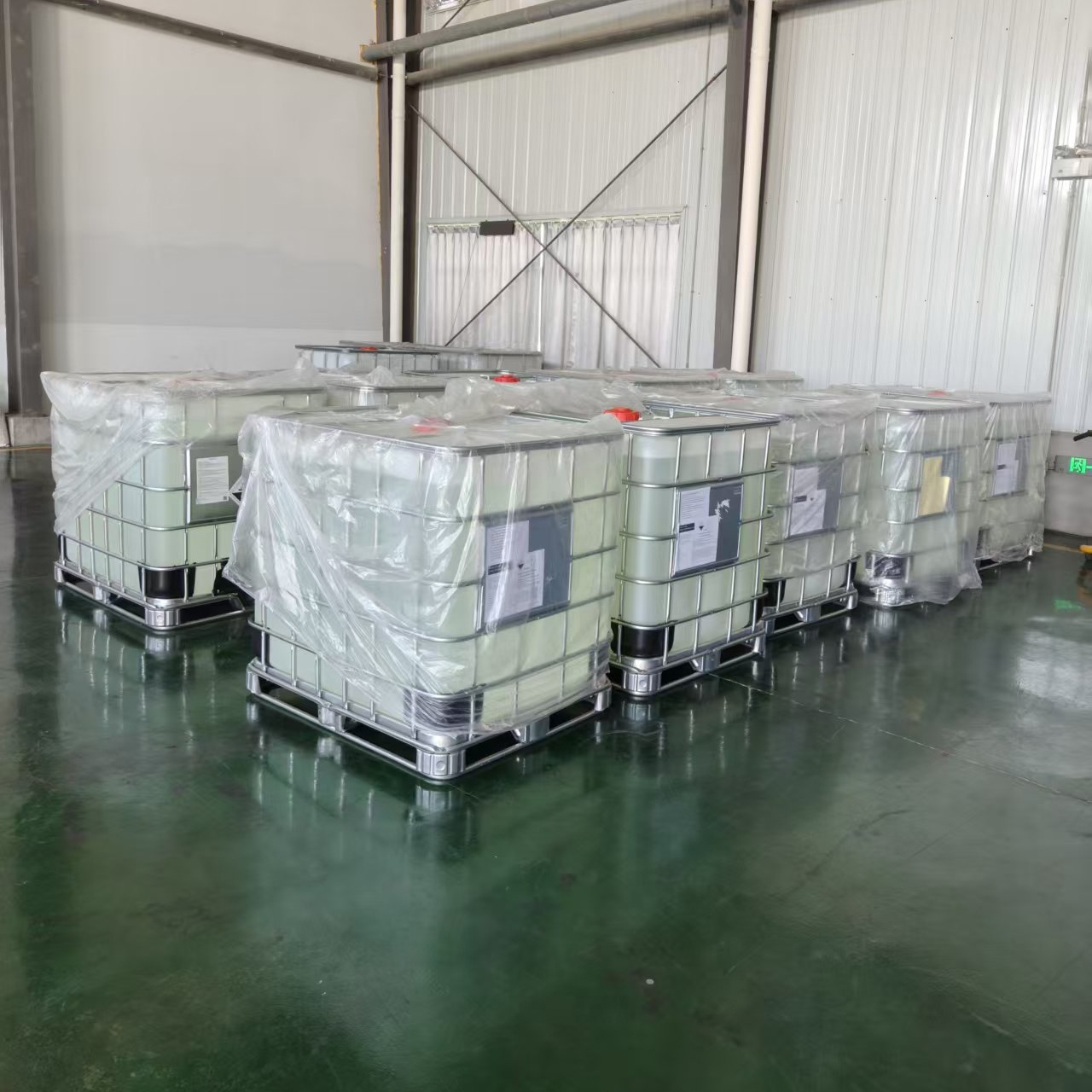
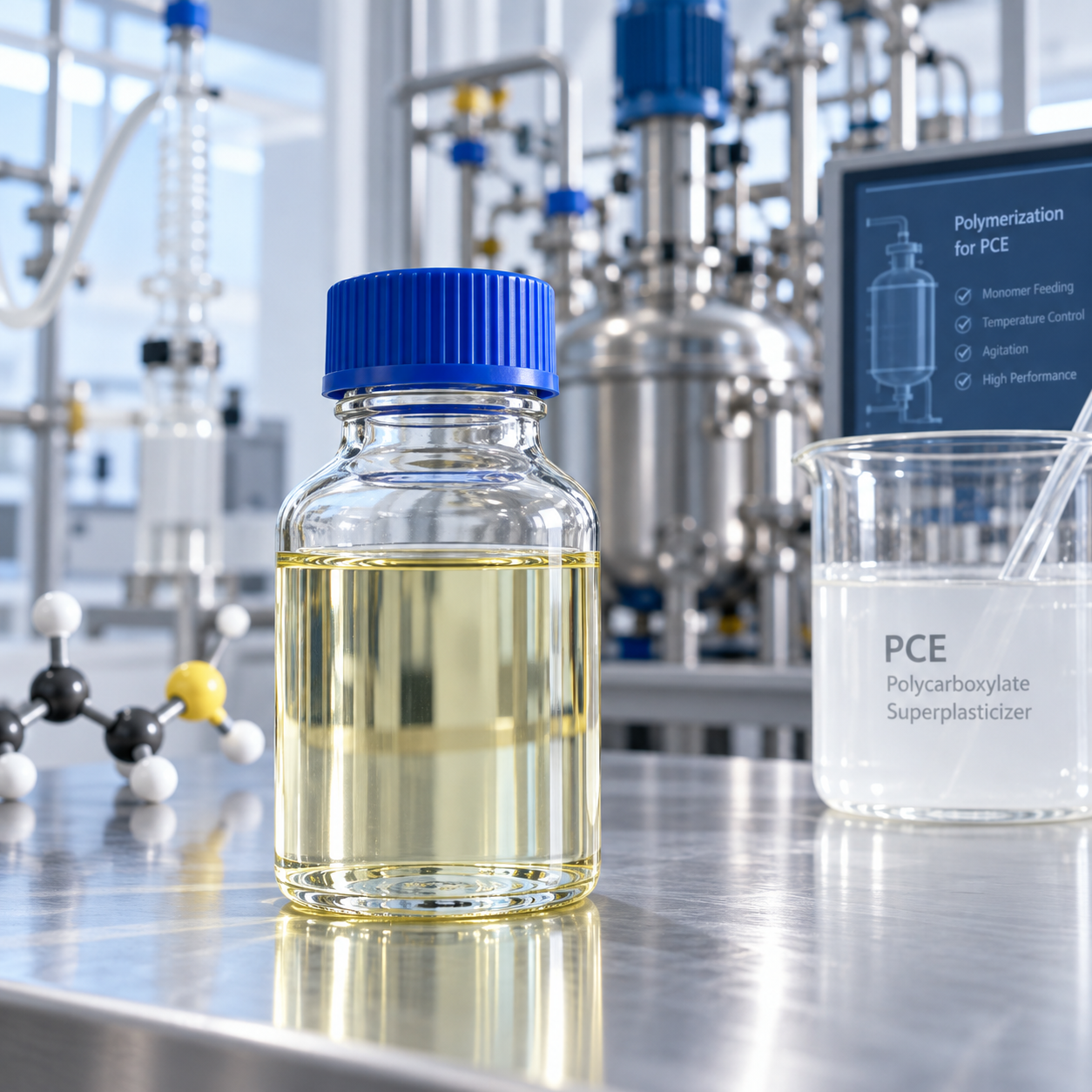
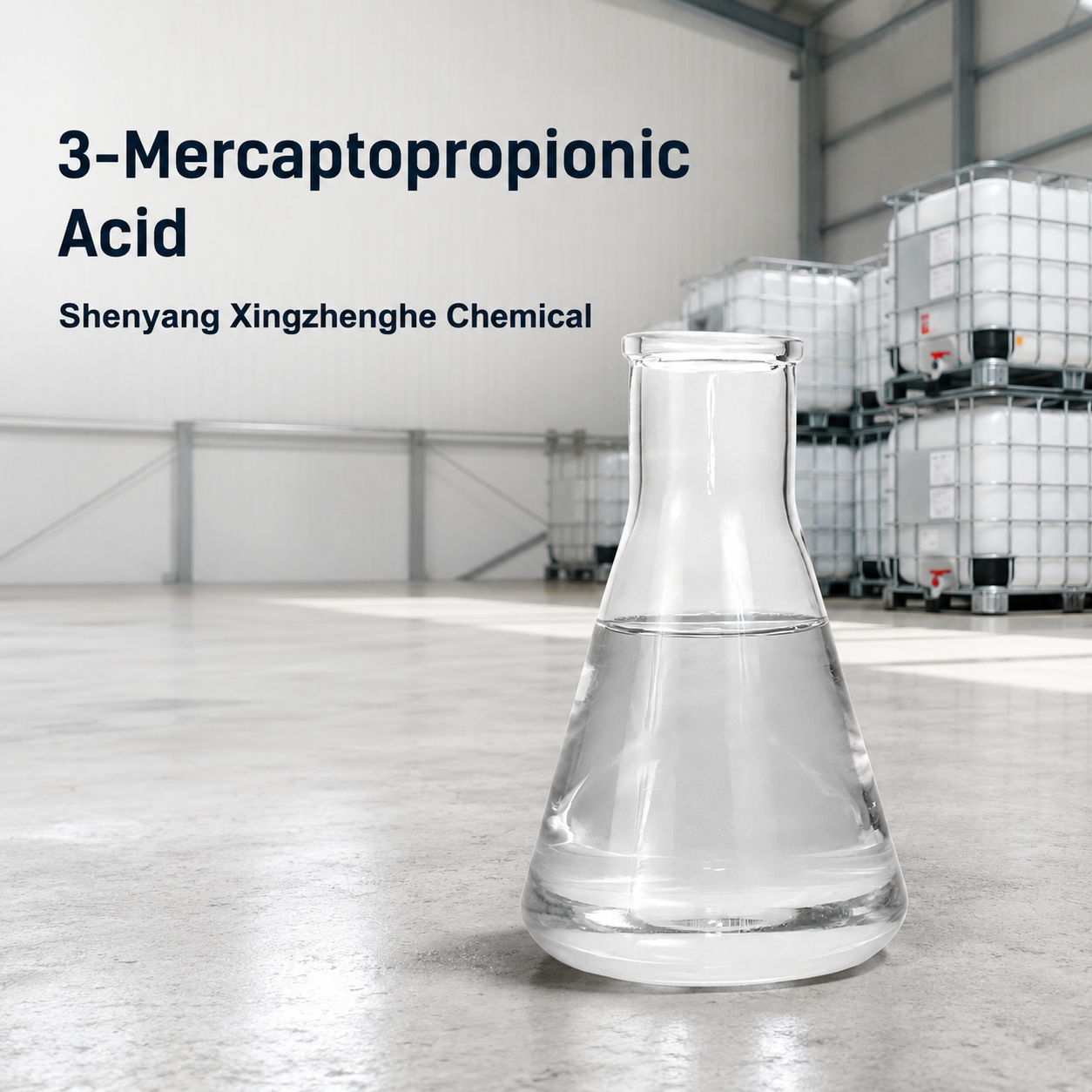
3-Mercaptopropionic Acid is generally supplied as a colorless to pale-yellow liquid.
Like many sulfur-containing organic compounds, it has a characteristic odor.
Commercial specifications may vary depending on purity grade, production process and intended application.
Industrial buyers commonly evaluate parameters such as:
Assay
Water content
Color
Appearance
Specific impurities
The appropriate specification depends on the downstream chemical process.
Why Is 3-MPA Chemically Useful?
The industrial value of 3-MPA comes largely from its bifunctional molecular structure.
Thiol Group (-SH)
The thiol group is chemically reactive and can participate in a variety of reactions, including thiol-related addition and chain-transfer reactions.
Carboxyl Group (-COOH)
The carboxylic acid group can participate in reactions such as esterification, salt formation and other derivatization processes.
Because the same molecule contains both functional groups, 3-MPA can be used where a sulfur-containing reactive group and carboxyl functionality are required within the same molecular structure.
What Is 3-Mercaptopropionic Acid Used For?
3-MPA is primarily an industrial raw material or intermediate rather than a finished consumer product.
Depending on the process, its applications can include:
Polymer synthesis
Polymer modification
Chain-transfer applications
Organic synthesis
Specialty chemical intermediates
Synthesis of sulfur-containing compounds
Functionalization reactions
The exact function of 3-MPA depends on the chemistry of the downstream process.
3-MPA as a Chain Transfer Agent
One important application of thiol-containing compounds is molecular-weight control in certain free-radical polymerization systems.
During free-radical polymerization, growing polymer radicals react continuously with monomer molecules.
A thiol-containing compound such as 3-MPA can participate in chain-transfer reactions.
This can influence:
Polymer molecular weight
Molecular-weight distribution
Polymer chain length
End-group functionality
Polymerization behavior
For this reason, 3-MPA can be considered as a chain-transfer-related raw material in suitable polymer systems.
How Does 3-MPA Affect Polymer Molecular Weight?
The effect of a chain-transfer agent depends on the entire polymerization system.
Increasing the concentration of an effective chain-transfer agent can generally increase the probability of chain-transfer events, which can influence average polymer chain length.
However, there is no universal 3-MPA dosage for all polymers.
Performance depends on:
Monomer chemistry
Initiator
Reaction temperature
Solvent
Polymerization method
Target molecular weight
3-MPA concentration
Application trials are therefore required before determining the final formulation.
3-MPA in Polymer Synthesis and Modification
3-Mercaptopropionic Acid can also be useful where a polymer or molecule requires functional groups derived from its thiol or carboxyl functionality.
This provides opportunities for chemical modification and functionalization.
The specific reaction pathway depends on the polymer system and desired end structure.
For industrial users, this means that 3-MPA should be selected according to the intended chemical reaction rather than simply according to price or nominal purity.
3-MPA as a Chemical Intermediate
3-MPA can serve as an intermediate for producing other sulfur-containing or carboxyl-functional chemicals.
The thiol group can participate in sulfur-related reactions, while the carboxyl group provides an additional site for chemical modification.
This makes 3-MPA useful in specialty chemical synthesis where bifunctional molecules are required.
3-Mercaptopropionic Acid vs Thioglycolic Acid
3-Mercaptopropionic Acid and Thioglycolic Acid both contain thiol and carboxylic acid groups, but their molecular structures are different.
Thioglycolic Acid can be represented as:
HS-CH₂-COOH
3-Mercaptopropionic Acid is:
HS-CH₂-CH₂-COOH
The additional methylene group changes the molecular structure and can affect physical properties and chemical behavior.
Therefore, the two chemicals should not automatically be considered direct one-to-one substitutes.
Any substitution should be evaluated in the actual reaction system.
3-MPA vs 2-Mercaptoethanol
3-MPA and 2-Mercaptoethanol both contain a thiol group, but their second functional groups are different.
3-MPA contains:
Thiol + Carboxylic Acid
2-Mercaptoethanol contains:
Thiol + Hydroxyl
This structural difference significantly affects downstream reaction possibilities.
For applications requiring carboxyl functionality in addition to a thiol group, 3-MPA provides a different chemical route from 2-Mercaptoethanol.
What Specifications Matter When Buying 3-MPA?
Industrial buyers should evaluate 3-Mercaptopropionic Acid according to the requirements of their actual process.
Important parameters can include:
Assay
Purity is one of the primary specifications for 3-MPA.
Higher-purity requirements may apply to processes that are sensitive to impurities.
Water Content
Water can influence certain polymerization and organic synthesis processes.
For water-sensitive applications, moisture control may therefore be particularly important.
Color
Color can matter when 3-MPA is used to produce light-colored or color-sensitive downstream products.
Impurity Profile
Two products with similar assay values may contain different trace impurities.
For demanding chemical synthesis, specific impurity control can be as important as total assay.
Batch Consistency
For continuous industrial production, stable quality from batch to batch helps reduce variation in the downstream process.
Why Can Two 3-MPA Products with Similar Purity Perform Differently?
A single assay value does not describe the complete composition of a chemical raw material.
Two 3-MPA products with similar nominal purity may differ in:
Moisture
Color
Trace impurities
Storage history
Batch consistency
These differences can influence sensitive polymerization or specialty chemical reactions.
For this reason, industrial evaluation should combine specification review with application testing.
Storage and Handling of 3-Mercaptopropionic Acid
3-MPA is a reactive sulfur-containing chemical and should be handled according to the current Safety Data Sheet (SDS), applicable regulations and site-specific chemical safety procedures.
Important considerations generally include:
Appropriate closed containers
Suitable storage conditions
Separation from incompatible materials
Adequate workplace ventilation
Appropriate personal protective equipment
Specific information regarding hazards, first aid, firefighting, accidental release, transportation and personal protection should always be obtained from the applicable SDS.
How to Select a 3-MPA Supplier
For industrial users, supplier evaluation should go beyond the quoted price per kilogram or ton.
Useful considerations include:
Product specification
Assay consistency
Moisture control
Color stability
Impurity profile
Batch-to-batch consistency
COA availability
SDS and technical documentation
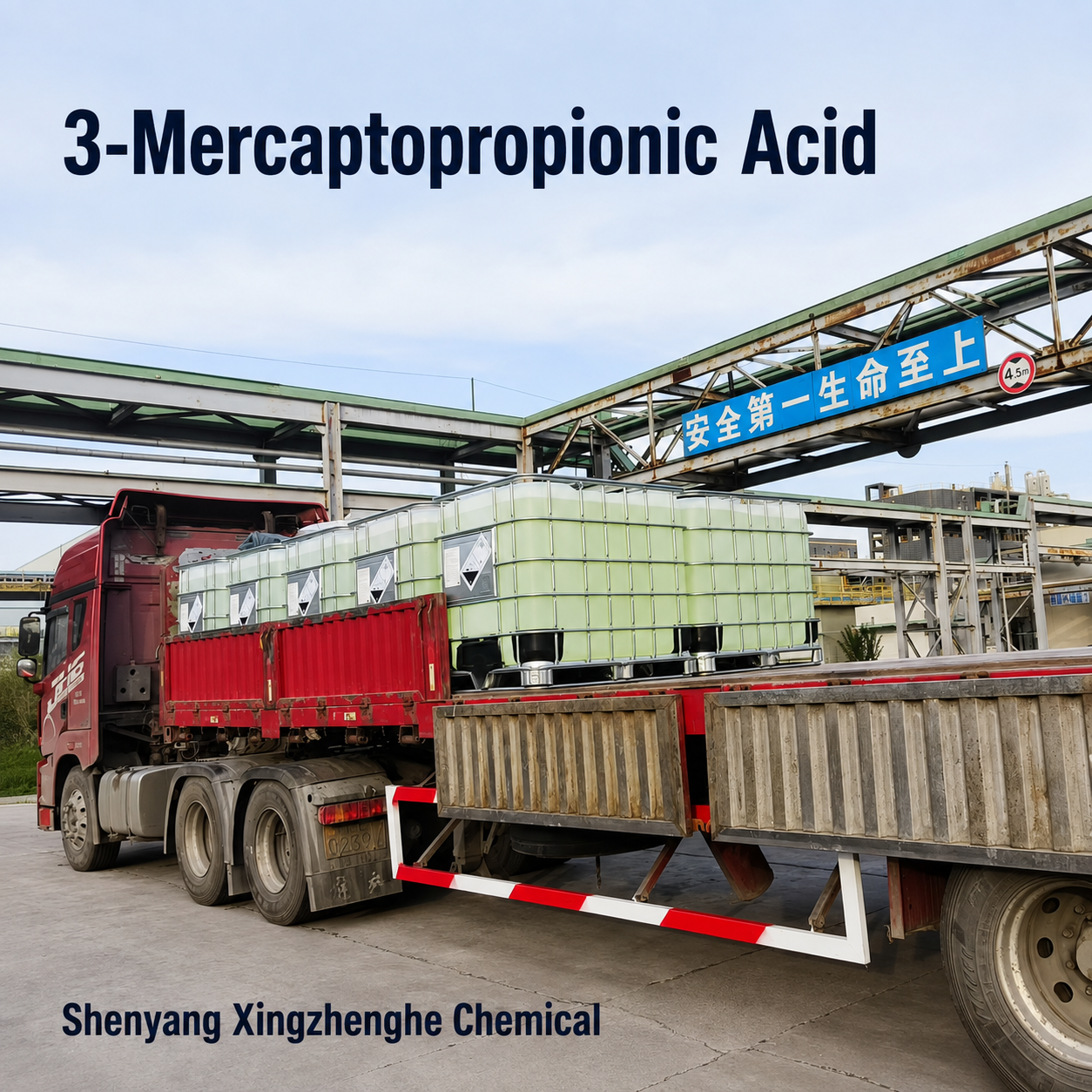
Packaging options
Application-specific sample testing
For polymerization and specialty chemical synthesis, consistent raw-material quality can be particularly important because small variations may influence downstream reactions.
Why Application Testing Is Important
3-Mercaptopropionic Acid is a reactive chemical raw material.
Its actual performance depends on the complete reaction system, including:
Monomers or reactants
Initiators or catalysts
Solvents
Temperature
pH
Reaction time
3-MPA concentration
Target product properties
A technical specification is therefore useful for preliminary product selection, but it cannot replace actual application testing.
For industrial processes, a practical evaluation should combine:
product specifications + laboratory testing + process evaluation + batch consistency.
Conclusion
3-Mercaptopropionic Acid (3-MPA, CAS 107-96-0) is a bifunctional organosulfur compound containing both a thiol group and a carboxylic acid group.
Its molecular structure makes it useful in polymer chemistry, chain-transfer applications, organic synthesis and the production of specialty chemical intermediates.
When selecting 3-MPA for industrial use, buyers should consider not only assay but also water content, color, impurities, batch consistency and compatibility with the intended chemical process.
For polymer and specialty chemical applications in particular, actual reaction testing provides a more meaningful basis for product selection than comparing a single specification alone.
 3-MPA vs Other Mercapto Chain
 How to Select a Reliable 3-Mer
 How Does 3-MPA Control Molecul
 3-Mercaptopropionic Acid as a