
Characteristics of 3-Mercaptopropionic Acid (MPA) Self-Assembled Monolayers as Nanoparticle Capping Agents
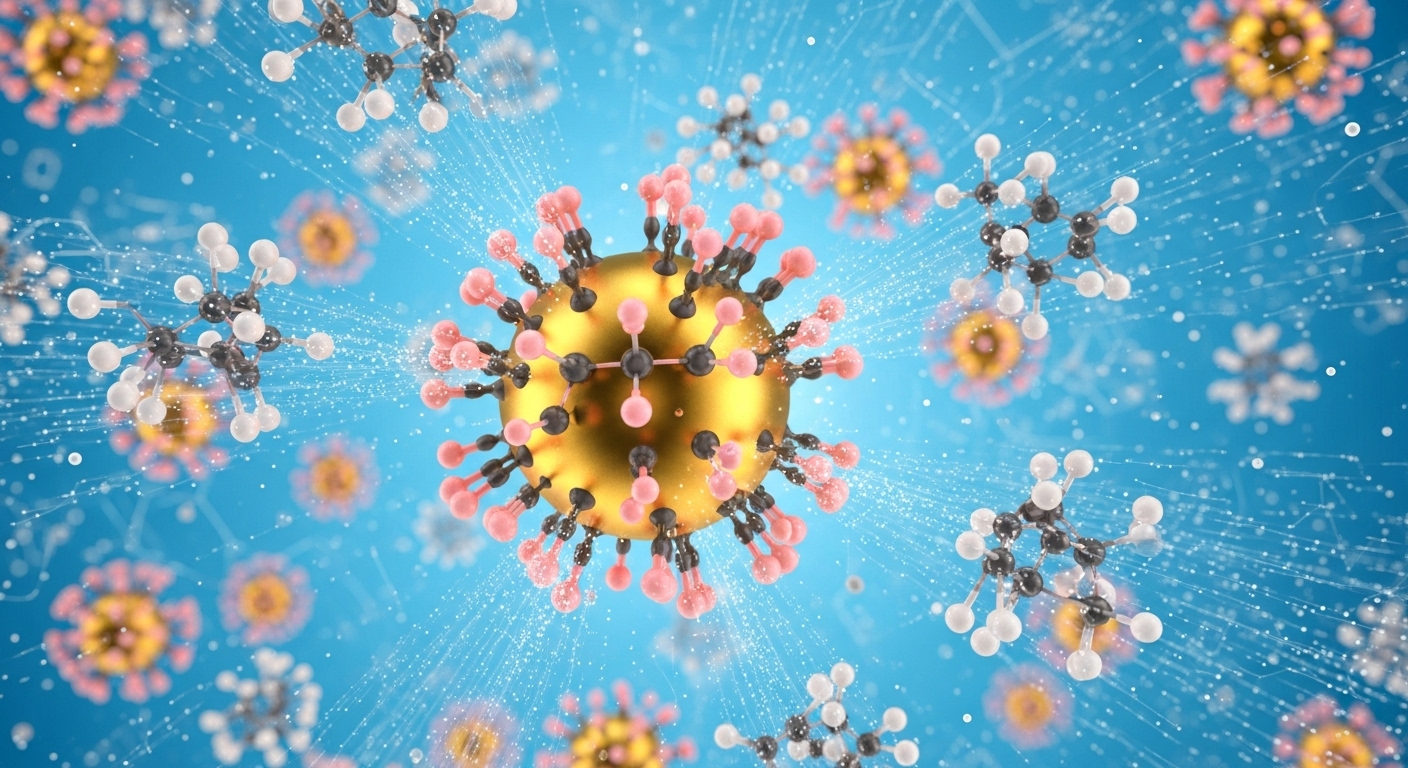
3-Mercaptopropionic acid (MPA) is a bifunctional organic small molecule commonly used as a capping agent for nanoparticles to form self-assembled monolayers (SAMs), thereby imparting specific surface properties and functions to the nanoparticles. Its unique bifunctional structure plays a crucial role in multiple fields including nanoparticle synthesis, stabilization, and functionalization.
I. Structure and Self-Assembly Properties
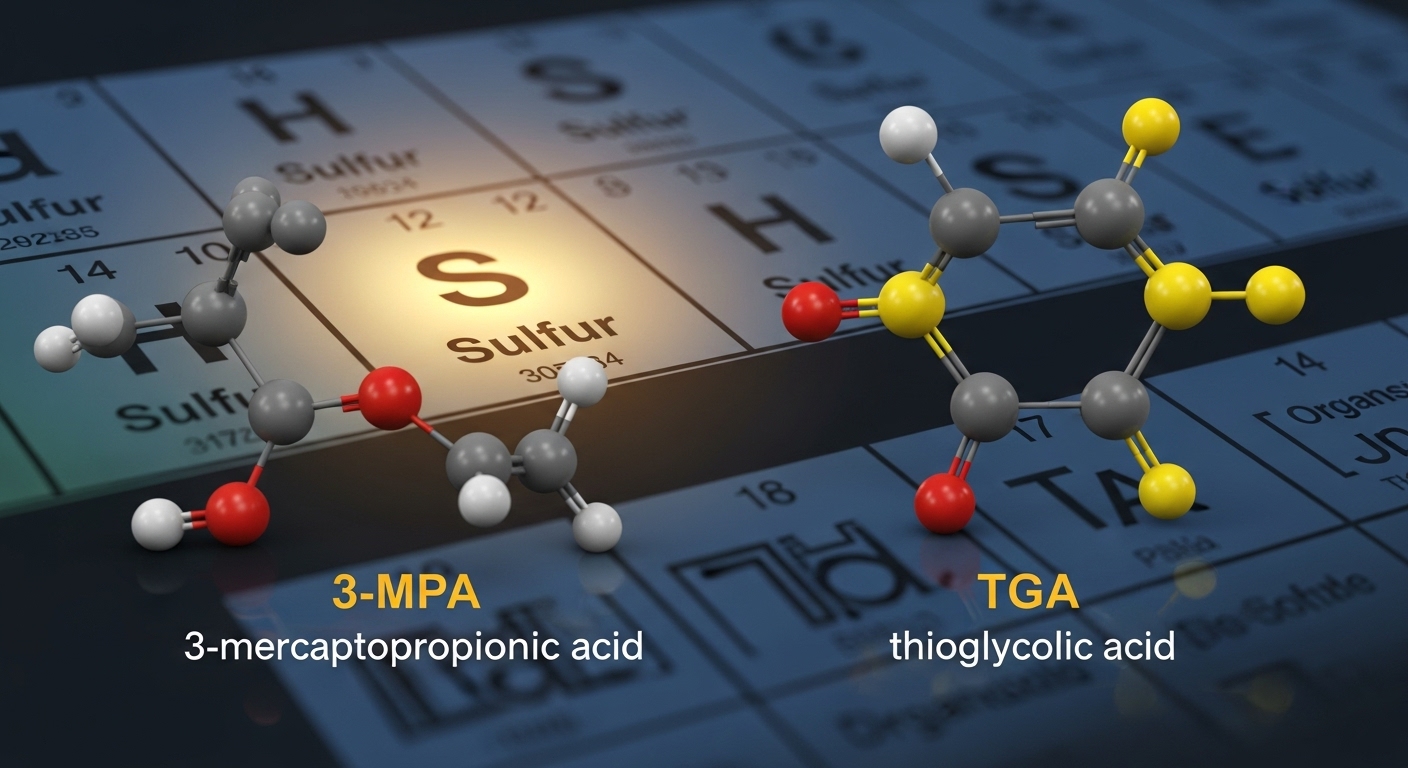
Bifunctional Molecular Structure: MPA's molecular structure simultaneously contains a thiol group (-SH) and a carboxyl group (-COOH). The thiol group exhibits strong chemical affinity with precious metals like gold and silver, as well as semiconductor materials such as cadmium selenide (CdSe) and zinc sulfide (ZnS). It firmly anchors MPA molecules to nanoparticle surfaces by forming stable coordination bonds (e.g., gold-sulfur bonds). The carboxyl groups, exposed on the outermost layer of the nanoparticle, determine the surface chemistry of the nanoparticle after capping. Highly Ordered Self-Assembly: MPA molecules can spontaneously form highly ordered self-assembled monolayers on nanoparticle surfaces. On specific nanoparticle surfaces (e.g., gold nanoparticles), MPA SAMs can even form molecular-scale ordered structures like (3 × 3) lattice arrangements, enabling precise control over nanoparticle surface properties. Short carbon chain characteristics: MPA's relatively short carbon chain influences the packing density and structure of SAMs. Studies using techniques like scanning tunneling microscopy (STM) have observed that MPA can form monolayers on gold nanoparticle surfaces where ordered and disordered regions coexist. Compared to long-chain thiol acids, SAMs formed by short-chain MPA may provide more surface free space in certain cases, thereby influencing subsequent surface reactions.
II. Surface Chemical Properties
pH Responsiveness and Hydrophilicity: Due to exposed carboxyl groups, MPA-modified nanoparticles exhibit pronounced pH responsiveness. At low pH, carboxyl groups become protonated (-COOH), resulting in an electroneutral nanoparticle surface. At high pH, carboxyl groups deprotonate to form carboxylate ions (-COO⁻), imparting a negative charge to the nanoparticle surface. This enhances hydrophilicity and dispersion stability in aqueous solutions. Excellent Water Solubility and Dispersion Stability: The carboxyl groups confer good water solubility to MPA-modified nanoparticles, effectively preventing agglomeration in aqueous media. For instance, MPA-capped zinc sulfide (ZnS) and cadmium sulfide (CdS) quantum dots exhibit outstanding dispersion stability in aqueous solutions. Easy Functionalization: Exposed carboxyl groups provide convenient reaction sites for nanoparticles, enabling their coupling with various amine-containing biomolecules (e.g., antibodies, aptamers, DNA) or polymers (e.g., polyethylene glycol, PEG) via chemical conjugation methods such as carbodiimide (EDC/NHS). This facilitates specific functionalization of nanoparticles for applications like biosensing and targeted drug delivery.
III. Applications and Electrochemical Properties
Electrochemical Sensing: MPA-modified nanoparticles find extensive applications in electrochemical sensing. MPA self-assembled monolayers (SAMs) can promote or modulate electron transfer of certain biomolecules (e.g., NADH, dopamine) at electrodes, enabling highly sensitive detection of these molecules. Additionally, MPA-modified quantum dots are employed for detecting specific metal ions (e.g., Co²⁺). Catalytic Activity: In certain catalytic systems, MPA SAMs not only stabilize nanoparticles but also influence the catalytic activity and selectivity of nanocatalysts through their unique interfacial environment. Three-Dimensional Structural Effects: When MPA assembles on nanoparticle arrays, it can form three-dimensional monolayers with unique properties. For instance, it exhibits distinct effects compared to two-dimensional planar SAMs in promoting electron transfer between electrodes and certain biomolecules, and can even prevent electrode poisoning by oxidation products.
IV. Comparison with Other Capping Agents
Comparison with Long-Chain Thiol Acids: As a short-chain thiol acid, MPA's SAMs may exhibit distinct packing densities and structures compared to long-chain thiol acids (e.g., 11-mercaptoundecanoic acid). Selecting thiol acids with varying chain lengths allows more precise control over nanoparticle surface properties in certain applications. Hybrid SAMs: MPA can also form hybrid SAMs with other thiol compounds. By combining thiol molecules with varying chain lengths and terminal functional groups, the chemical and physical properties of nanoparticle surfaces can be finely tuned to meet specific application requirements. For example, regulating hydrogen bonding interactions in a mixture of MPA and 1-decanethiol can engineer nanoparticle surfaces.
In summary, 3-Mercaptopropionic acid, when used as a capping agent for nanoparticles, forms self-assembled monolayers exhibiting the following key characteristics: dual functionality, stabilizing nanoparticles while imparting chemical reactivity; pH responsiveness, enabling tunable dispersion and surface charge in aqueous solutions; ease of functionalization, providing a convenient platform for bio-coupling and functionalization of nanoparticles; and outstanding electrochemical activity, making it highly valuable for applications such as electrochemical sensing. These properties establish MPA as a versatile and important surface modifier for nanomaterials.
 Technical specifications and
 3-Mercaptopropionic Acid: A C
 3-Mercaptopropionic Acid: An
 Characteristics of 3-Mercaptop