
How Does 3-MPA Control Molecular Weight in Acrylic Polymerization?
Why Is Molecular Weight Control Important in Acrylic Polymerization?
In acrylic polymerization, the objective is not simply to convert monomers into the longest possible polymer chains.
The molecular weight and molecular weight distribution of a polymer can influence properties such as:
solution viscosity;
processing behavior;
rheology;
polymer architecture;
end-group characteristics;
performance in the intended downstream application.
Different polymers therefore require different molecular-weight ranges.
One method used to influence molecular weight in certain free-radical polymerization systems is the introduction of a chain transfer agent.
3-Mercaptopropionic Acid (3-MPA) contains a thiol group and can be evaluated as a chain transfer agent in suitable acrylic and related polymerization systems.
However, using 3-MPA is not simply a matter of adding a fixed percentage to every formulation.
Its effect depends on the complete polymerization system.
1. What Happens During Acrylic Free-Radical Polymerization?
A simplified free-radical polymerization process can be described as:
Initiation → Propagation → Chain Transfer / Termination
An initiator generates reactive radical species.
These radicals react with monomer molecules, producing growing polymer radicals. Additional monomers continue to add to the active chain.
Without considering other reactions, the polymer chain can continue to grow until termination occurs.
When a chain transfer agent such as 3-MPA is present, an additional pathway becomes available.
A growing polymer radical can participate in a chain-transfer reaction involving 3-MPA.
This changes the growth history of the polymer chain and generates another radical species capable of participating in further reactions.
As a result, chain transfer can influence the average length of polymer chains formed in the system.
2. Why Does the Thiol Group of 3-MPA Matter?
3-Mercaptopropionic Acid has two notable functional groups:
—SH: thiol group
—COOH: carboxylic acid group
For its use as a chain transfer agent, the thiol group is particularly important.
Thiols can participate in radical chain-transfer reactions because of the characteristics of the S–H bond and the resulting sulfur-centered species.
In simplified terms:
Growing polymer radical + 3-MPA
↓
Chain-transfer reaction
↓
Growth of the original polymer chain changes
↓
New radical species is generated
↓
Further polymerization reactions can occur
This is the basic reason 3-MPA can be used as a molecular-weight-control component in suitable radical polymerization formulations.
3. Does More 3-MPA Mean Lower Molecular Weight?
Under otherwise comparable conditions, increasing the level of an effective chain transfer agent can increase the frequency of chain-transfer events.
This can reduce the average degree of polymerization and may therefore reduce average molecular weight.
However, the relationship should not be interpreted as a universal linear formula.
Acrylic polymerization is influenced by several variables simultaneously, including:
monomer composition;
monomer concentration;
initiator type;
initiator concentration;
temperature;
reaction medium;
feeding profile;
solids content;
reaction time;
chain transfer agent level.
Therefore:
More 3-MPA does not automatically mean a proportionally lower molecular weight in every formulation.
The relationship should be established experimentally for the actual polymerization system.
4. Why Is There No Universal 3-MPA Dosage?
A common formulation question is:
“How much 3-MPA should I use?”
There is no single addition rate that applies to all acrylic polymers.
Consider two formulations.
Formulation A
Acrylic acid is one of the main monomers, and the target is a relatively low molecular-weight water-soluble polymer.
Formulation B
Several acrylic monomers are copolymerized, and the required polymer architecture and final application are different.
Even if both formulations use 3-MPA, the appropriate addition level may be different.
The target should therefore be defined first:
target molecular weight → polymer properties → application requirements
and the chain transfer agent level can then be investigated accordingly.
5. How Can a 3-MPA Dosage Trial Be Designed?
A controlled gradient is generally more useful than testing only one arbitrary dosage.
For example:
| Trial | 3-MPA Level | Monomers | Initiator | Temperature |
|---|---|---|---|---|
| A | Control | Same | Same | Same |
| B | Low | Same | Same | Same |
| C | Medium | Same | Same | Same |
| D | Higher | Same | Same | Same |
The polymer can then be evaluated according to the requirements of the project.
Possible measurements include:
molecular weight;
molecular weight distribution;
viscosity;
solids content;
residual monomer;
conversion-related data;
final application performance.
Not every project requires all of these tests. The appropriate analytical program depends on the polymer and its intended use.
The important principle is to keep other major variables as consistent as practical while studying the effect of 3-MPA.
6. Why Does Initiator Level Matter?
3-MPA does not control molecular weight independently of the initiator system.
The initiator influences radical generation, and radical concentration can affect polymer chain growth and termination behavior.
Therefore, both:
chain transfer agent level
and
initiator conditions
can influence the final molecular-weight profile.
Suppose a laboratory increases the 3-MPA dosage while simultaneously making a substantial change to the initiator concentration.
If the molecular weight changes, it becomes difficult to determine how much of the difference was caused by 3-MPA.
For formulation development, changing one major variable at a time can provide clearer information.
7. Why Can Reaction Temperature Change the Result?
Temperature is another important polymerization variable.
It can influence:
initiator decomposition;
reaction rate;
radical concentration;
monomer conversion behavior;
heat-transfer requirements.
This means:
same monomers + same 3-MPA dosage + different reaction temperature
may not necessarily produce polymers with identical molecular-weight characteristics.
Temperature control is therefore important when comparing 3-MPA dosage trials.
8. Does the Addition Method of 3-MPA Matter?
Potentially, yes.
In some polymerization processes, a chain transfer agent may be:
charged initially;
added in stages;
continuously fed;
co-fed with another component according to the process design.
These methods can produce different concentration profiles during the reaction.
For example, adding the entire quantity at the beginning creates a different reaction environment from gradually feeding it over several hours.
Therefore, when reproducing a polymerization process, it is useful to record not only:
“3-MPA = X amount”
but also:
when it was added + how quickly it was added + how it was distributed during the reaction.
The appropriate feeding strategy should be determined according to the specific polymerization process.
9. Why Can Laboratory and Production Results Differ?
A polymerization process that performs as expected in a laboratory reactor may require further verification during scale-up.
Industrial reactors differ from laboratory equipment in:
mixing efficiency;
heat transfer;
feed distribution;
reactor geometry;
temperature gradients;
reaction volume.
For example, a feed profile that produces relatively uniform conditions in a small reactor may behave differently after scale-up.
Therefore, a laboratory 3-MPA dosage should not automatically be treated as a final production specification without appropriate scale-up evaluation.
10. What Role Can 3-MPA Play in Acrylic Acid Polymerization?
Acrylic acid and related monomers are used to produce a range of polymeric materials.
For some of these polymerization systems, controlling molecular weight is an important part of formulation design.
3-MPA can be evaluated as a chain transfer agent where its chemical characteristics are suitable for the target system.
However, the final polymer is determined by the entire formulation:
monomer composition + initiator + chain transfer agent + reaction conditions + feeding process.
Therefore, if a polymer batch shows an unexpected viscosity or molecular-weight result, it is not sufficient to investigate only the 3-MPA dosage.
11. Can 3-MPA Be Used in Polycarboxylate-Related Polymerization?
Some polycarboxylate-related polymers are prepared through free-radical polymerization involving acrylic monomers and other polymerizable components.
In such systems, a chain transfer agent may be used as one of the variables for controlling polymer molecular weight and structure.
3-MPA can be evaluated for suitable formulations.
However, the performance of the final polycarboxylate polymer may also depend on:
polyether macromonomer;
acrylic monomer composition;
initiator system;
reaction temperature;
feed sequence;
chain transfer conditions;
final polymer architecture.
For this reason, the suitability of 3-MPA should be confirmed within the actual polymerization formulation.
12. Why Can Two 3-MPA Samples Produce Different Polymerization Results?
Two products may both be labeled:
3-Mercaptopropionic Acid — CAS 107-96-0
and may have similar assay values.
That does not mean a polymer manufacturer should automatically skip incoming inspection and application testing.
Depending on the purchasing specification, buyers may also review:
water content;
appearance/color;
relevant impurities;
batch consistency;
storage history;
agreed analytical specifications.
For a sensitive polymerization process, small changes in raw-material conditions can be worth investigating alongside other process variables.
The actual significance should be determined through testing rather than assumed from the specification sheet alone.
13. Assay Alone Does Not Describe Polymerization Suitability
Assay is an important purchasing specification for 3-MPA.
However, polymer manufacturers normally need to consider both:
raw-material specification
and
performance in the actual polymerization process.
For example, when qualifying a new supplier, a practical process can include:
Specification Review → Incoming Sample Analysis → Laboratory Polymerization → Polymer Analysis → Application Evaluation → Scale-Up Verification
This approach provides more information than comparing assay values alone.
14. How Should Two 3-MPA Suppliers Be Compared?
A controlled supplier comparison can be divided into several stages.
Stage 1 — Raw Material Comparison
Compare agreed parameters such as:
assay;
water;
appearance;
relevant agreed impurities.
Stage 2 — Equal-Dosage Polymerization
Use the same:
monomer batch + initiator conditions + temperature + feed profile + reaction time
and change only the 3-MPA source where practical.
Stage 3 — Polymer Analysis
Compare the properties relevant to the project, such as:
molecular weight → molecular weight distribution → viscosity → solids → application performance.
Stage 4 — Dosage Optimization
If the equal-dosage comparison shows differences, conduct a controlled dosage gradient rather than immediately rejecting or accepting the new material.
This can help distinguish between product suitability and formulation adjustment requirements.
15. What Information Should Be Provided When Requesting a 3-MPA Sample?
For polymerization applications, useful information can include:
Product: 3-Mercaptopropionic Acid / 3-MPA
Application: chain transfer agent, acrylic polymerization or other use
Required specification: according to the buyer's process
Quantity: sample, trial order or commercial order
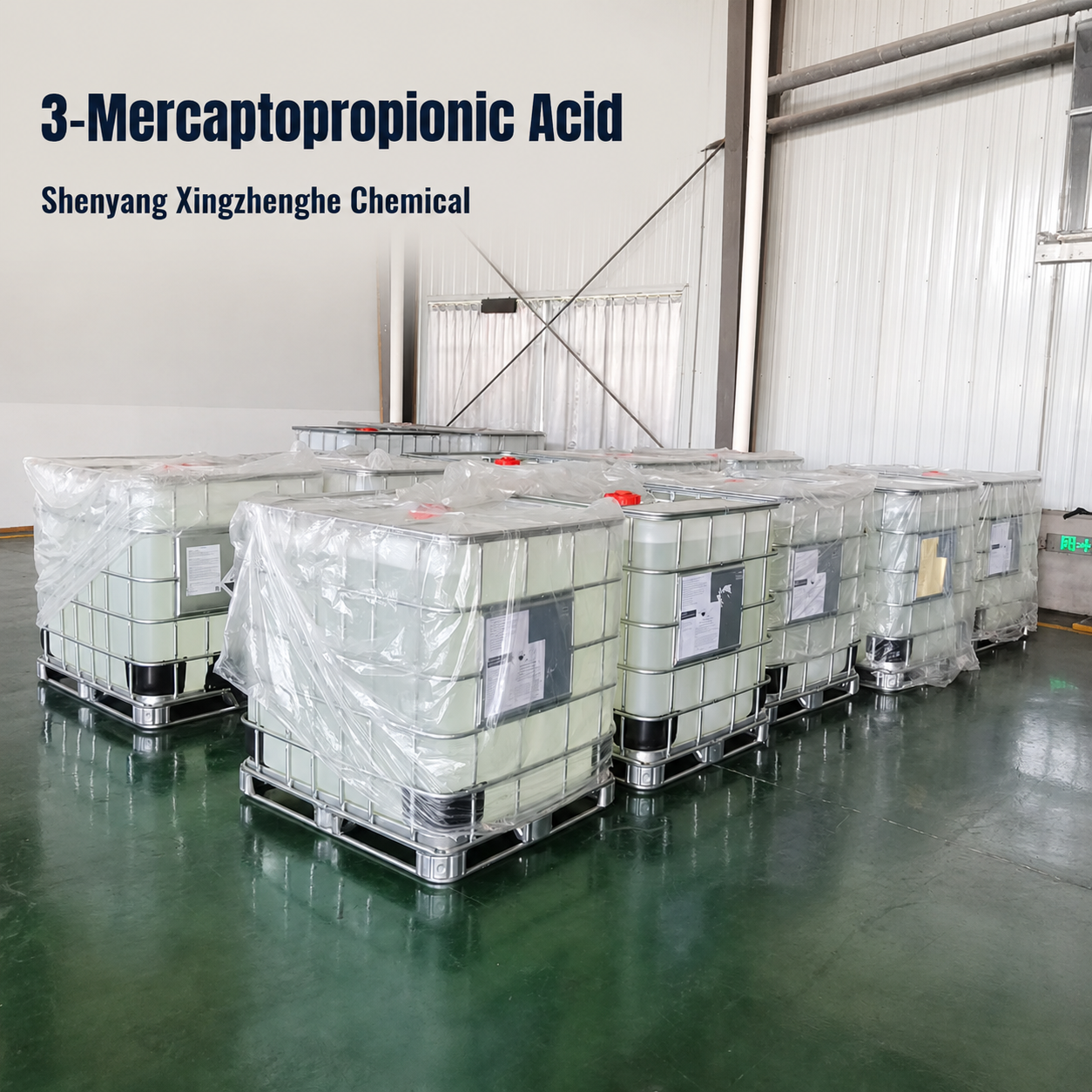
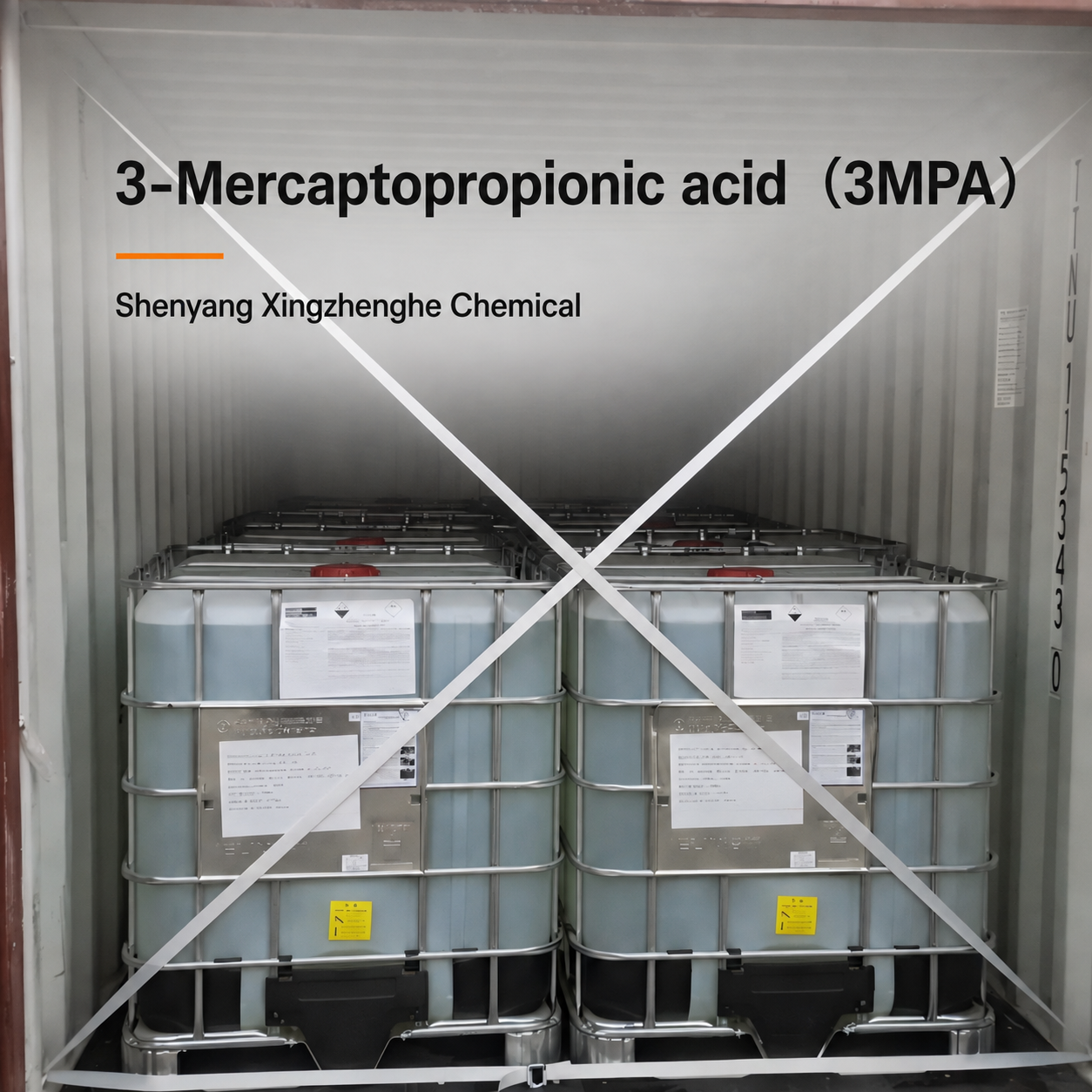
Packaging: required packaging format
Destination: delivery location or destination port
Documentation: required commercial or technical documents
If the buyer is replacing an existing chain transfer agent or supplier, this can also be stated so that the sample can be evaluated accordingly.
Frequently Asked Questions
Does 3-MPA reduce polymer molecular weight?
3-MPA can participate in chain-transfer reactions in suitable free-radical polymerization systems and can therefore influence average polymer molecular weight. The actual result depends on dosage and the overall polymerization conditions.
How much 3-MPA should be used in acrylic polymerization?
There is no universal dosage. The appropriate level depends on monomer composition, target molecular weight, initiator conditions, temperature, feeding method and other process variables.
Is 3-MPA a chain transfer agent for acrylic polymers?
3-MPA can be evaluated as a thiol-based chain transfer agent in suitable acrylic and related free-radical polymerization systems.
Does the initiator affect 3-MPA performance?
Yes. Initiator conditions affect radical generation and polymerization behavior, so the initiator system and 3-MPA level should be considered together during formulation development.
Does the 3-MPA feeding method affect molecular weight?
It can. Initial charging, staged addition and continuous feeding create different concentration profiles during polymerization and may influence the reaction result.
Can one supplier's 3-MPA directly replace another supplier's product?
For industrial polymerization, sample testing is recommended before commercial replacement. Similar product names and specifications do not by themselves demonstrate identical performance in a particular formulation.
3-Mercaptopropionic Acid for Polymer Manufacturing
Shenyang Xingzhenghe Chemical Co., Ltd. supplies 3-Mercaptopropionic Acid (3-MPA, CAS 107-96-0) for polymerization and other applicable industrial uses.
For polymer manufacturers evaluating 3-MPA as a chain transfer agent, product specifications, batch documentation, packaging information and samples can be provided according to purchasing requirements.
For new formulations or supplier replacement projects, laboratory polymerization and appropriate scale-up verification are recommended because the final result can depend on monomer composition, initiator conditions, 3-MPA dosage, temperature and feeding process.
For a commercial quotation, buyers can provide the required quantity, specification, packaging and destination.
 How Does 3-MPA Control Molecul
 3-Mercaptopropionic Acid as a
 3-Mercaptopropionic Acid (3-MP
 3-Mercaptopropionic Acid (3-MP